Lifespan as register maintenance
Biological ageing is standardly the accumulation of molecular damage, of which replicative senescence — the shortening of telomeres to a critical length across cell divisions — is a well-characterised component. The framework offers a complementary description: the living body is a register held at a precise setting (a temperature of 36.864 °C = 2¹²·3²⁄1000, and a coherence rhythm near 40 Hz, the Earth’s circumference divided by a thousand), and ageing is the drift of that register from its setting rather than, primarily, the accrual of damage.
Prediction — offered for testing. If ageing is register drift, maintenance of the register at its setting slows drift and admits a longer coherent lifespan than the span observed under uncorrected drift. This is the framework’s expectation, not an established result; it names no therapy and prescribes no intervention.
The register boundary within the Earth
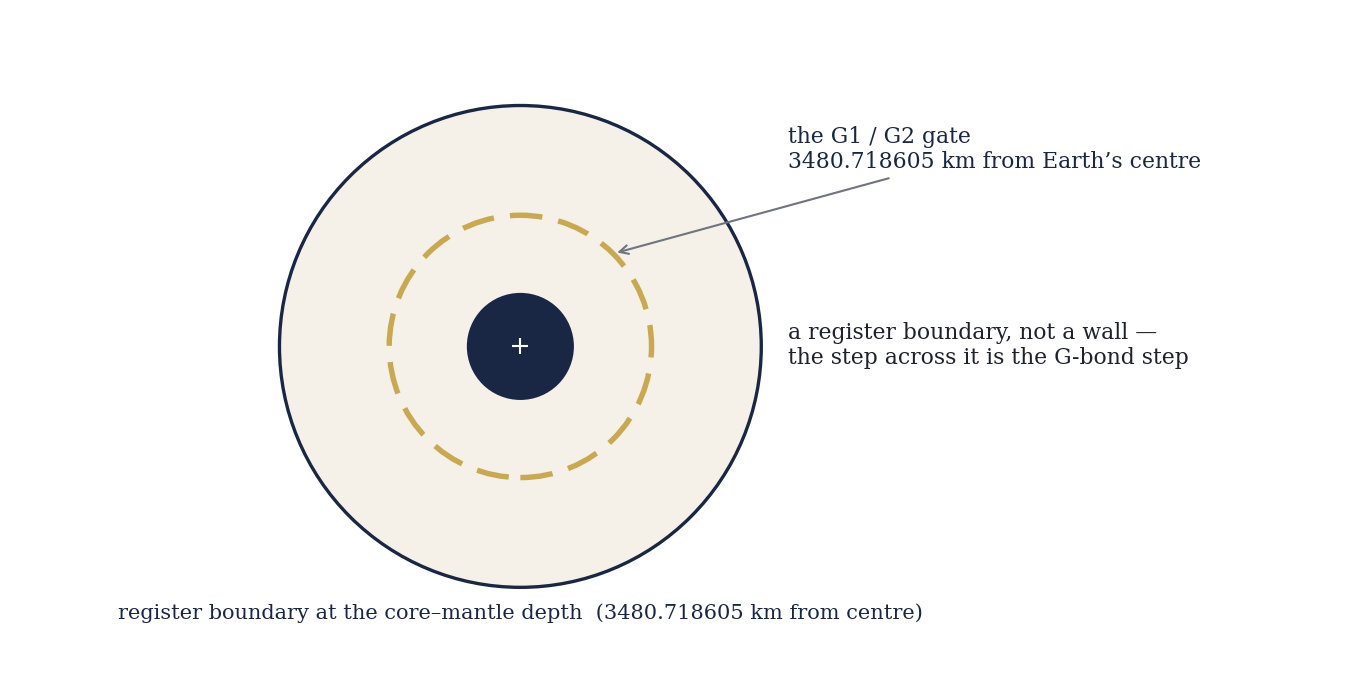
The framework’s layered picture posits a boundary between the ordinary register (G1) and an adjacent one (G2). On its geometry this boundary is not remote but internal to the planet: it lies 3480.718605 km from the Earth’s centre — coincident, to the accuracy of seismology, with the core–mantle boundary, the depth at which the liquid outer core meets the mantle. Across the single G-bond step the speed of light takes the framework’s G1 value, 299,789,233.683089 m/s.
Interstellar reach by register-address matching
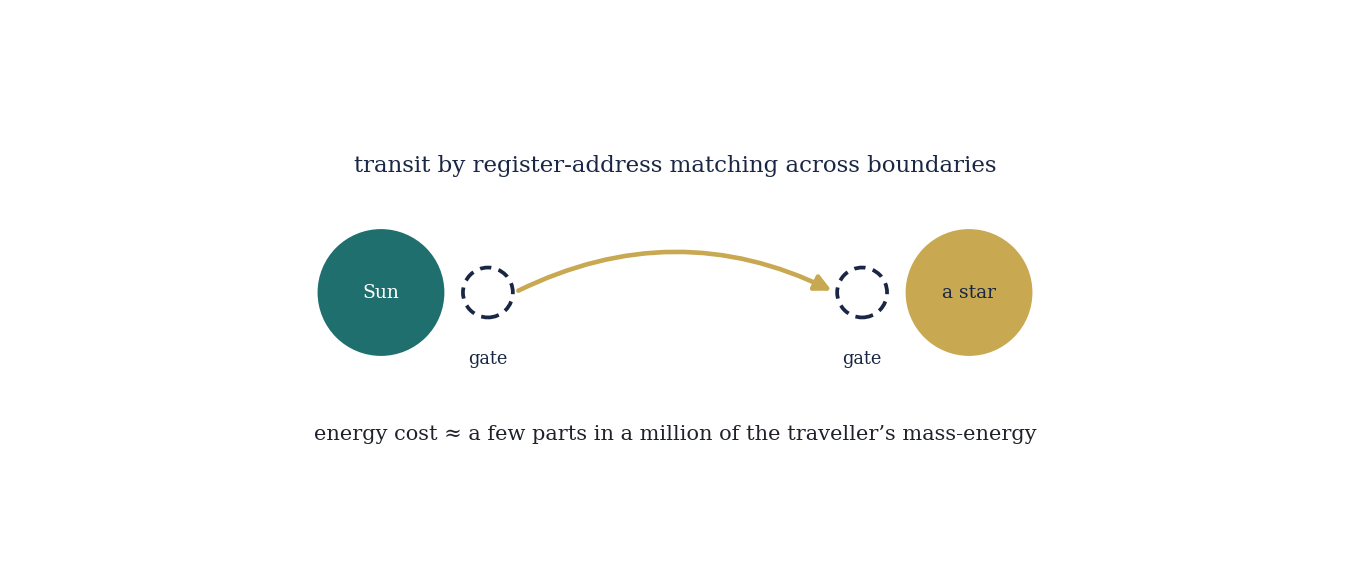
The established obstacle to interstellar travel is energetic: the rocket equation makes the propellant to reach a useful fraction of light speed grow exponentially. The framework does not contest this obstacle; it circumvents it. If each stellar system possesses its own register boundary, transit may proceed by matching register addresses across boundaries rather than by traversing the intervening space — at an energy cost of order a few parts in a million of the traveller’s own mass-energy.
The programme, with its epistemic status marked
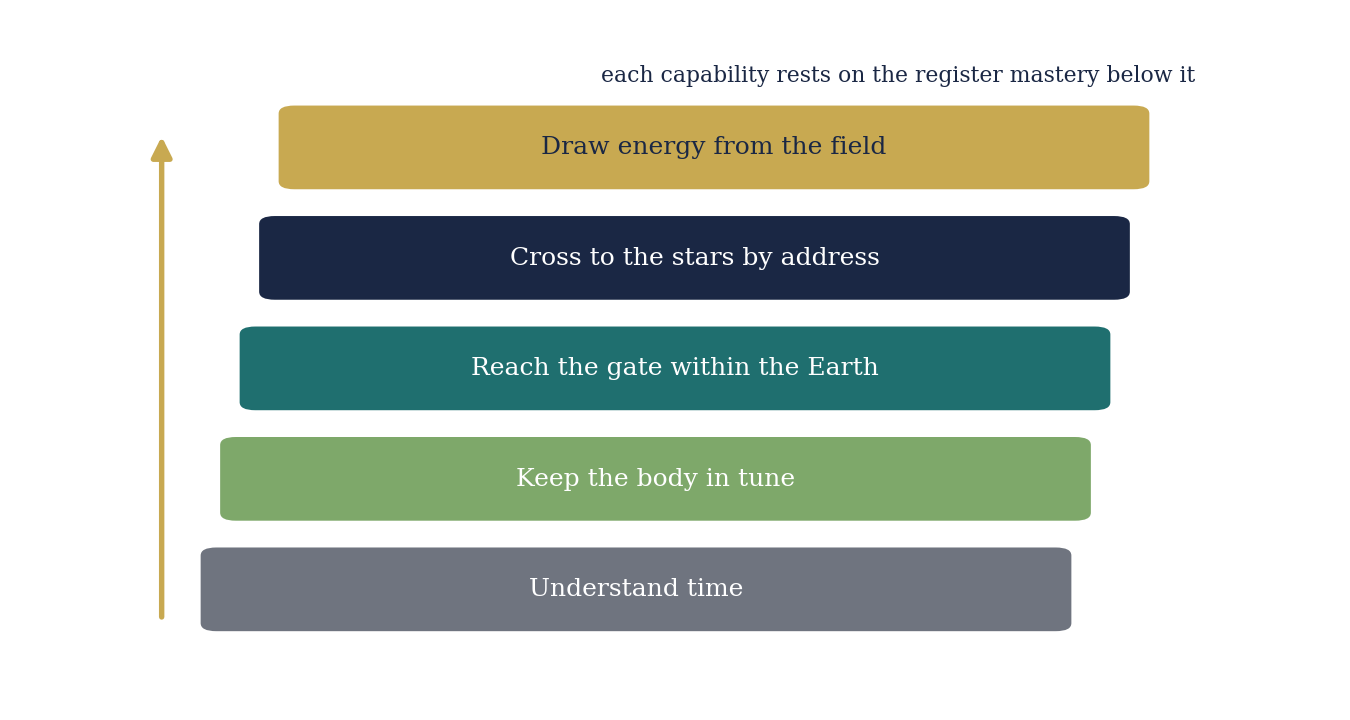
The capabilities are ordered, each resting on the register mastery below it, and the ascent is driven by more accurate description of the single field rather than by greater force.
Replicative senescence and telomere attrition; the seismological core–mantle boundary; the rocket equation’s verdict on reaction propulsion.
Constants as lattice nodes; registers separated by the G-bond step; the boundary at 3480.718605 km; c(G1) = 299,789,233.683089 m/s.
Ageing as register drift and lifespan extensible; interstellar reach by address-matching; field coupling removing the energy ceiling.