Two strands: the body and the address
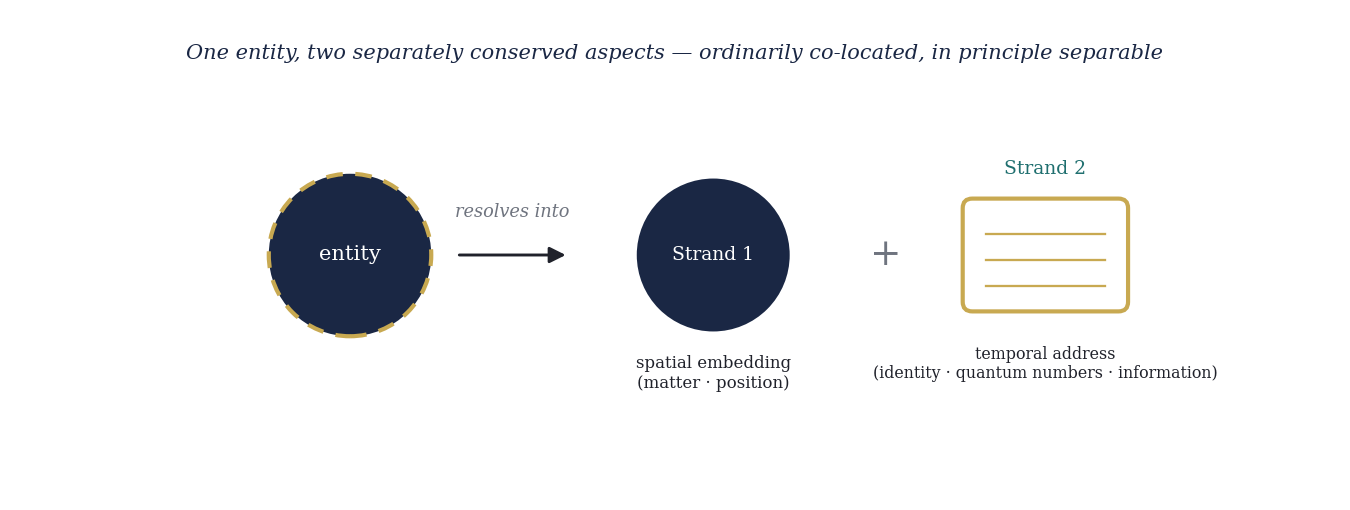
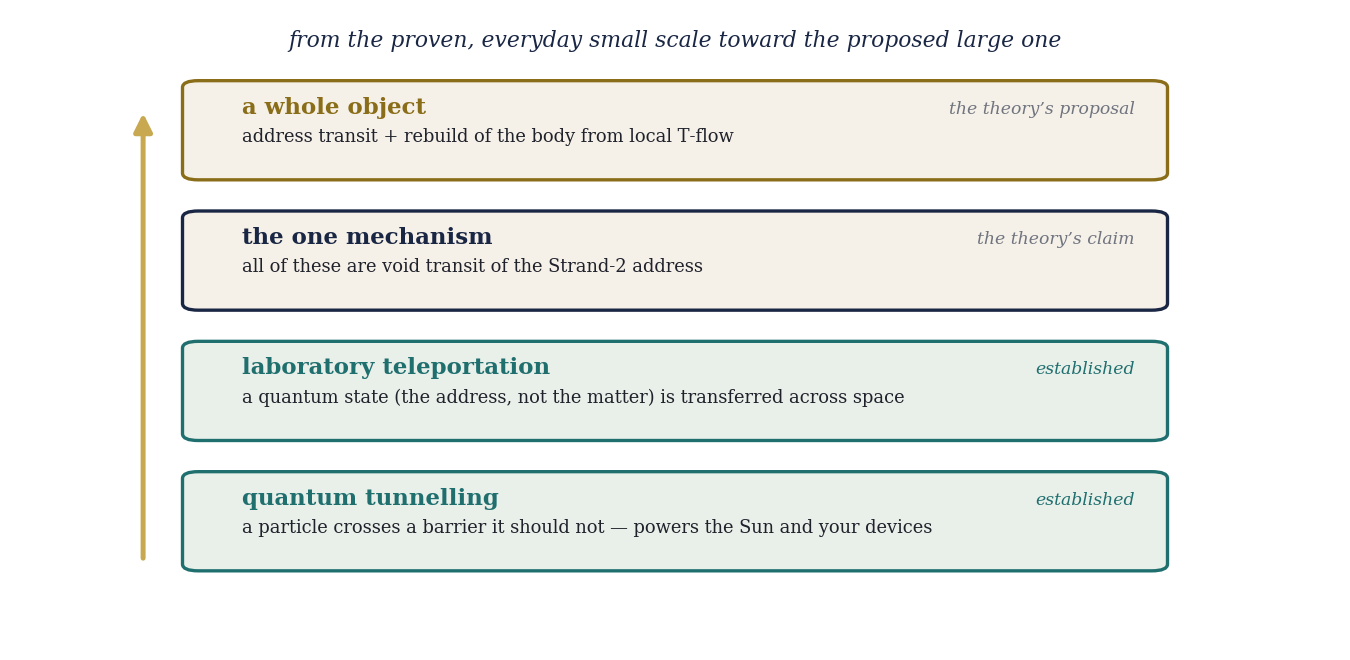
Every entity resolves into two separately conserved aspects: a spatial embedding (Strand 1 — matter and position) and a temporal address (Strand 2 — identity, quantum numbers, information). The two are ordinarily co-located but are distinct degrees of freedom. Laboratory quantum teleportation already transfers the address, not the matter: it reproduces a quantum state at a distant location while the original material system is not transported.
The void between the shells
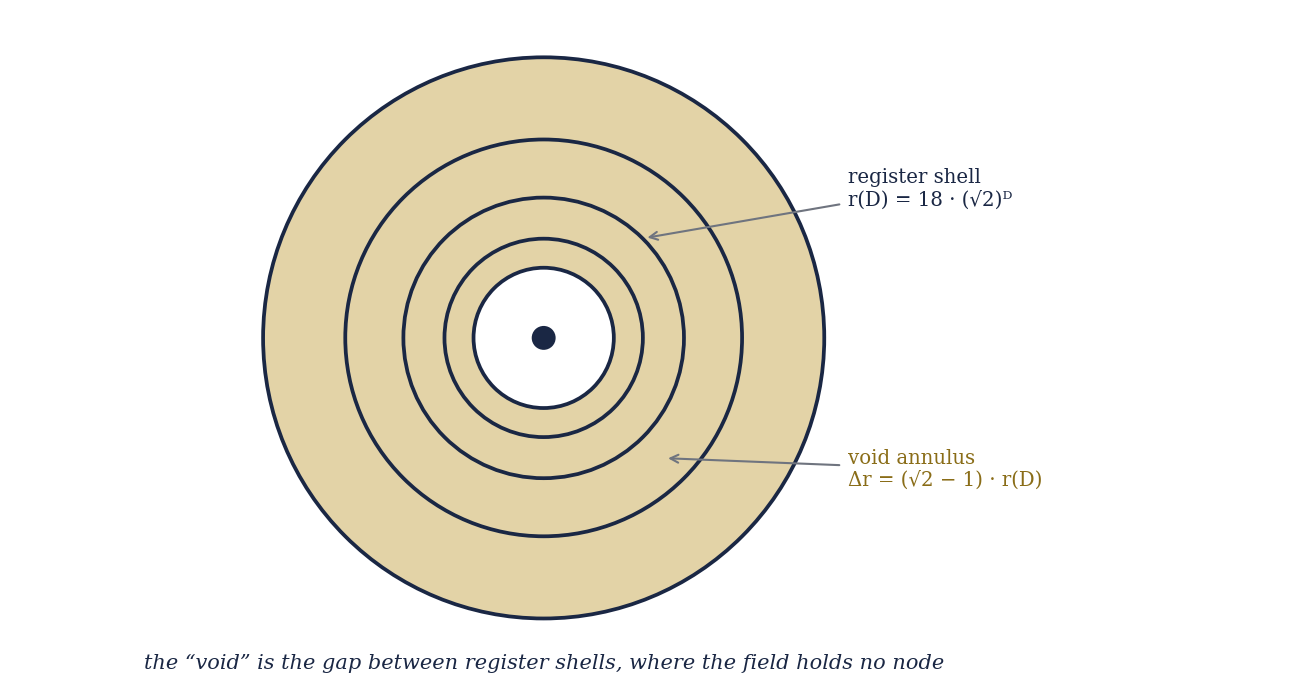
The Τ-field supports standing-wave nodes only on discrete register shells of radius r(D) = 18·(√2)ᴰ. Between consecutive shells lies a void annulus of width Δr = (√2 − 1)·r(D) that holds no node. A material body requires a node to occupy and cannot rest in the annulus; an address, being informational, requires none and can cross. The void is a channel selectively open to the address and closed to the body.
Tunnelling — the elementary case, and established physics
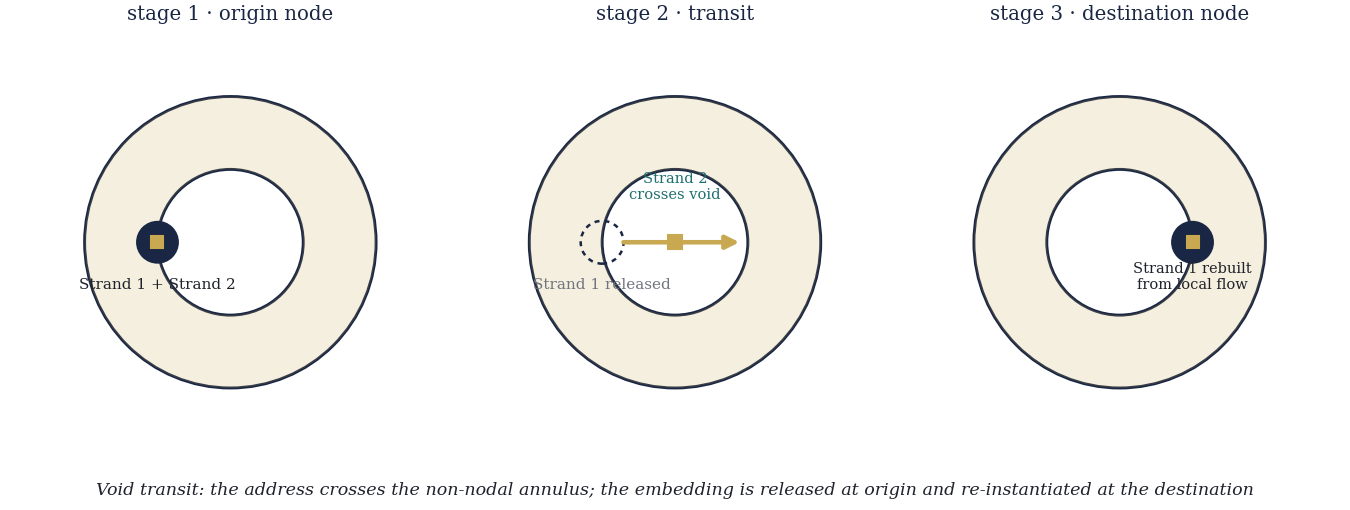
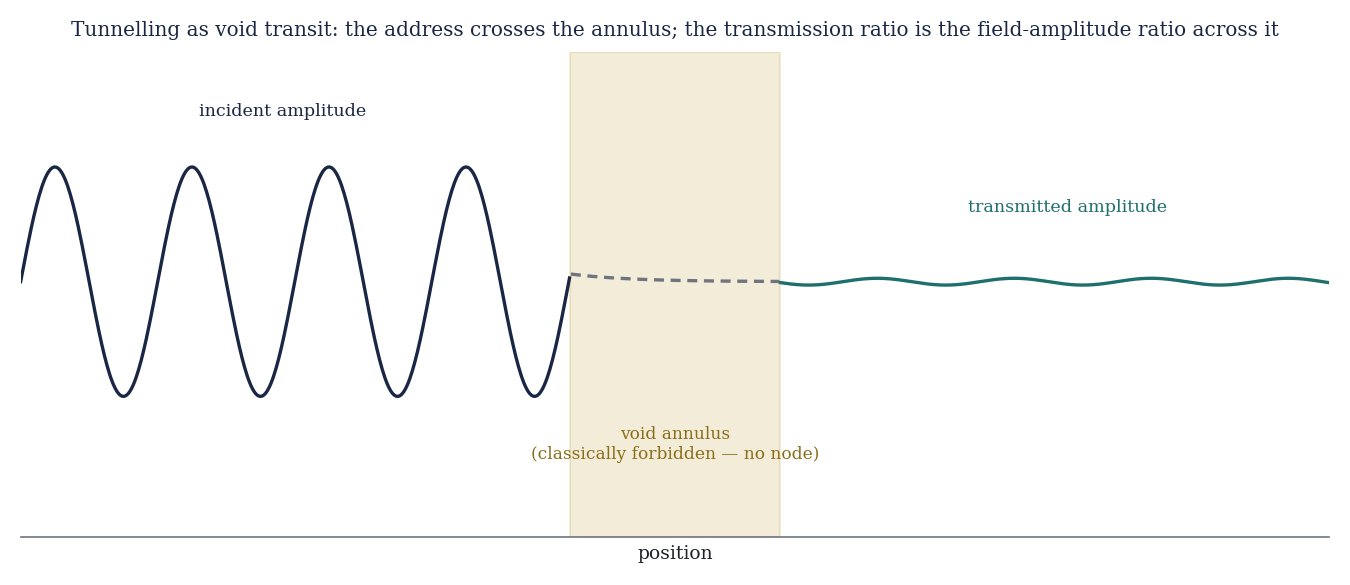
A particle incident on a barrier it cannot classically surmount nonetheless appears beyond it. This is not speculation — it powers stellar fusion, radioactive decay, the scanning tunnelling microscope, and flash memory. In the framework the barrier is a void annulus and the passage is a void transit at the elementary scale: the particle’s address crosses the annulus and the body re-forms on the far shell. The exponential tunnelling law is the dependence of the transit probability on the annulus width.
The unification
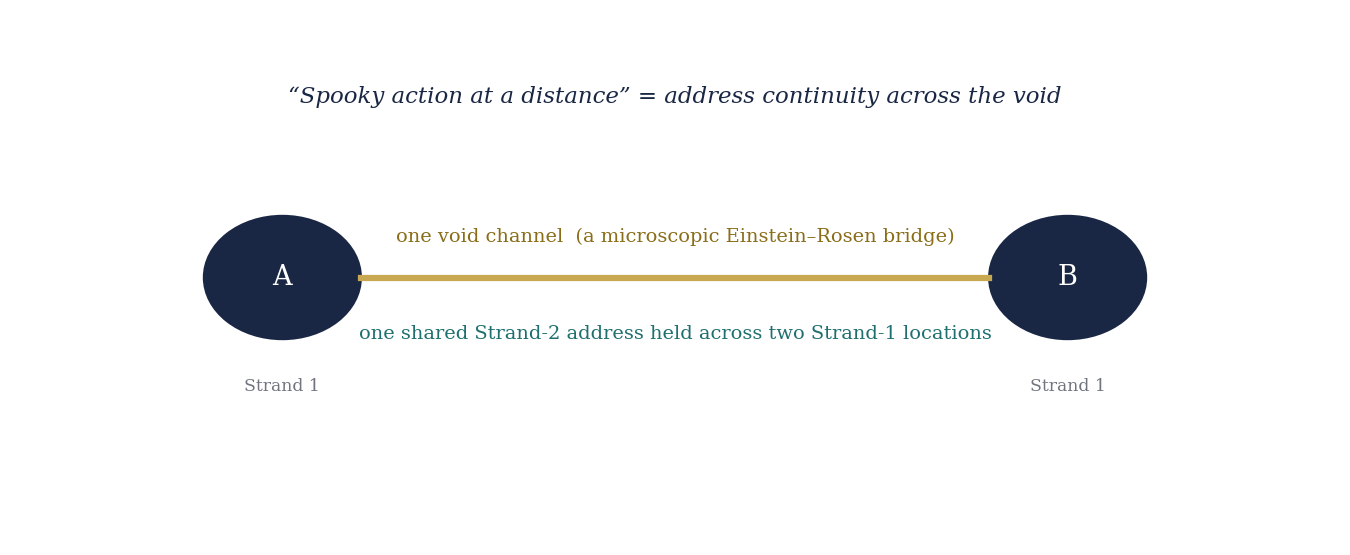
An entangled pair is one address across two loci through one void channel — a microscopic Einstein–Rosen bridge. “Spooky action” is address continuity, not a signal; no-signalling is respected.
The address is unique and cannot be in two places at once; a transit moves it, never copies it. No-cloning is a corollary, not an independent postulate.
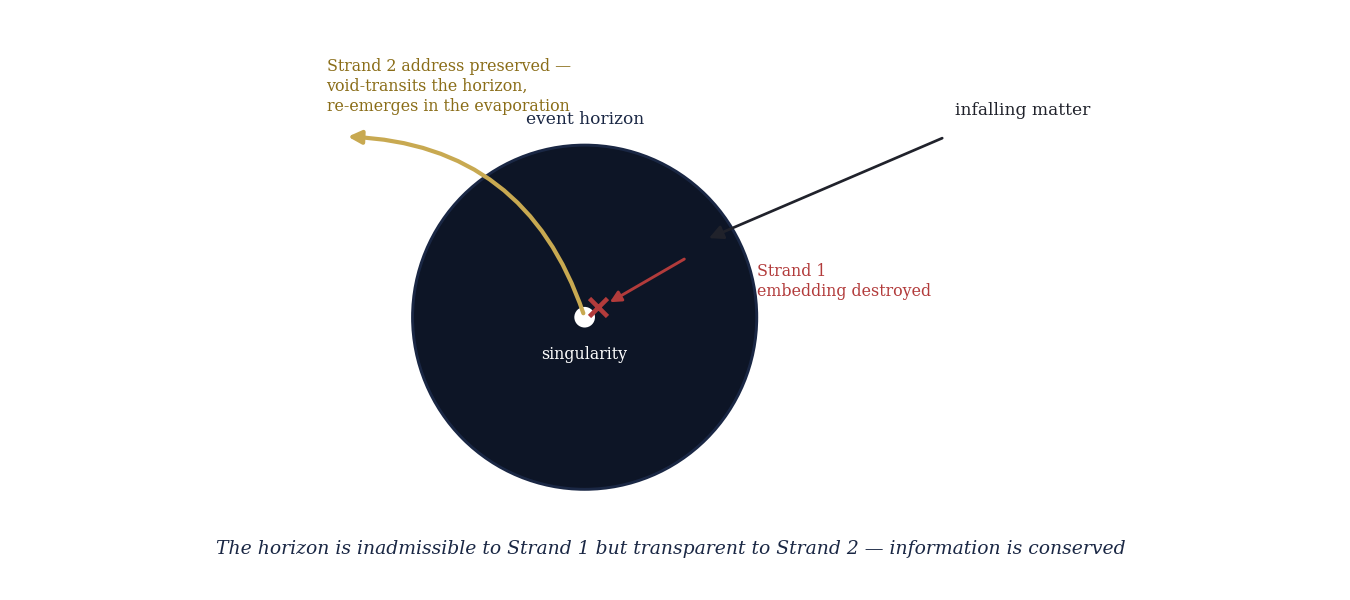
Matter’s embedding is destroyed at the singularity; the address void-transits the horizon and re-emerges in the evaporation. Information is conserved.
Tunnelling and laboratory teleportation are established; their unification is the theory’s claim; macroscopic transport is a proposal, marked as such.
The one who arrives is not a copy: you are your address, never duplicated — continuous not in matter (already replaced many times over a lifetime) but in the address that has always been yours.